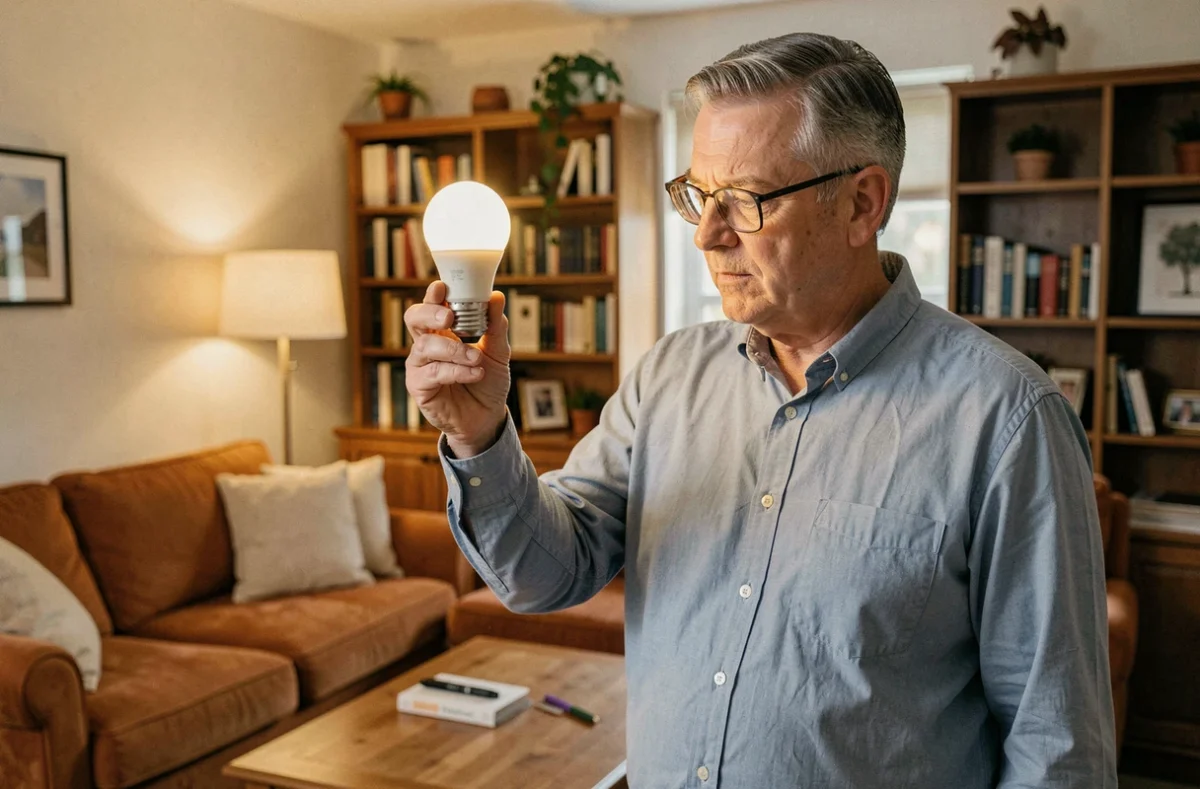
A light bulb burns out in the living room ceiling fixture on a Sunday evening. The tenant hesitates, and the landlord won’t respond until Monday. In a furnished rental, this everyday situation can still cause recurring tension, especially when the light fixture is part of the furniture listed in the inventory. The law clearly settles the question, but a few scenarios are worth taking a closer look at.
Light fixtures included with the furniture: what’s different in a furnished rental
In an unfurnished rental, tenants often install their own light fixtures. In a furnished rental, lighting fixtures are part of the equipment provided with the property. Chandeliers, bedside lamps, wall sconces: they should all be listed in the furniture inventory attached to the lease.
This makes a difference when the move-out inspection takes place. If a light fixture is damaged, the move-in inventory is used to determine who is responsible for the repair. As for the bulb itself, the rule is the same as for an unfurnished rental: the tenant must replace burned-out bulbs, regardless of the type of lease.
One often-overlooked issue is replacing bulbs in a furnished rental when the property comes with LED bulbs that have a specific base or with recessed models. Tenants are still responsible for replacing them, but the cost can range from a few euros to several dozen, depending on the model.

The 1987 decree and tenant repairs to electrical equipment
Decree No. 87-712 of August 26, 1987, sets out the list of tenant repairs. Its appendix, Section V, covering electrical equipment, explicitly includes replacing light bulbs, switches, power outlets, circuit breakers and fuses.
The law makes no distinction between furnished and unfurnished rentals. Ceiling height, socket type and difficulty of access do not change this obligation. In practical terms, even a bulb mounted three meters up in a mezzanine is the tenant’s responsibility.
The landlord’s responsibilities begin beyond the bulb itself: anything involving the electrical circuit (wiring, electrical panel, circuit breaker, bringing the installation up to code) falls to the owner. The responsibilities can be summarized as follows:
- Tenant’s responsibility: light bulbs, fluorescent tubes, starters, fuses, switches and power outlets that fail through normal wear and tear
- Landlord’s responsibility: replacing or repairing concealed wiring, the electrical panel, or bringing the installation up to code
- Gray area: if a light fixture’s socket or built-in transformer fails and prevents the bulb from working, the landlord may be responsible if the fault is unrelated to the tenant’s use
Wear and tear and the move-out inspection: what makes a difference in practice
The decree sets out the rule, but the move-in inspection and the wear-and-tear schedule determine what can actually be deducted from the security deposit. In a furnished rental, two separate documents come into play: the property condition report and the detailed furniture inventory.
Recording the number and type of working bulbs at move-in helps prevent disputes when the tenant leaves. An inventory that says “living room light fixture with working GU10 LED bulb” is more useful than a line that simply says “lighting: OK.”
Wear-and-tear schedules and light bulbs
The parties may agree to attach a wear-and-tear schedule to the lease. It is used to account for normal wear over time. A bulb that burns out after two years of occupancy is still a tenant repair; wear and tear generally does not apply because a bulb is a consumable. However, a light fixture whose mechanism has deteriorated over time may fall under the wear-and-tear schedule.
The landlord cannot unilaterally set the amount to be deducted from the security deposit for missing bulbs. They must provide supporting evidence, such as a comparison of the move-in and move-out inspection reports, invoices or estimates.
Specialty bulbs and difficult access: the obligation stays the same, but practical challenges remain
Some furnished properties, particularly high-end vacation rentals or apartments with mezzanines, use bulbs with unusual bases (G9 halogen, low-voltage GU5.3) or recessed spotlights that require partial disassembly.
The decree makes no exceptions for cost or difficulty of access. The tenant must replace the bulb, even if the spotlight is recessed in a false ceiling. In practice, things get more complicated when replacing the bulb requires work on the transformer or the fixture itself.
When tenants can contact the landlord
There are three situations in which tenants should contact the landlord rather than attempt the work themselves:
- The light fixture does not work even though the new bulb is compatible: the problem is probably with the socket or wiring, which is the landlord’s responsibility
- Access to the fixture requires professional equipment (a lift, scaffolding) in a shared area or a hazardous location: the landlord may be required to facilitate the work
- The bulb model is no longer manufactured and the fixture cannot take a suitable replacement: the landlord is then responsible for replacing the fixture
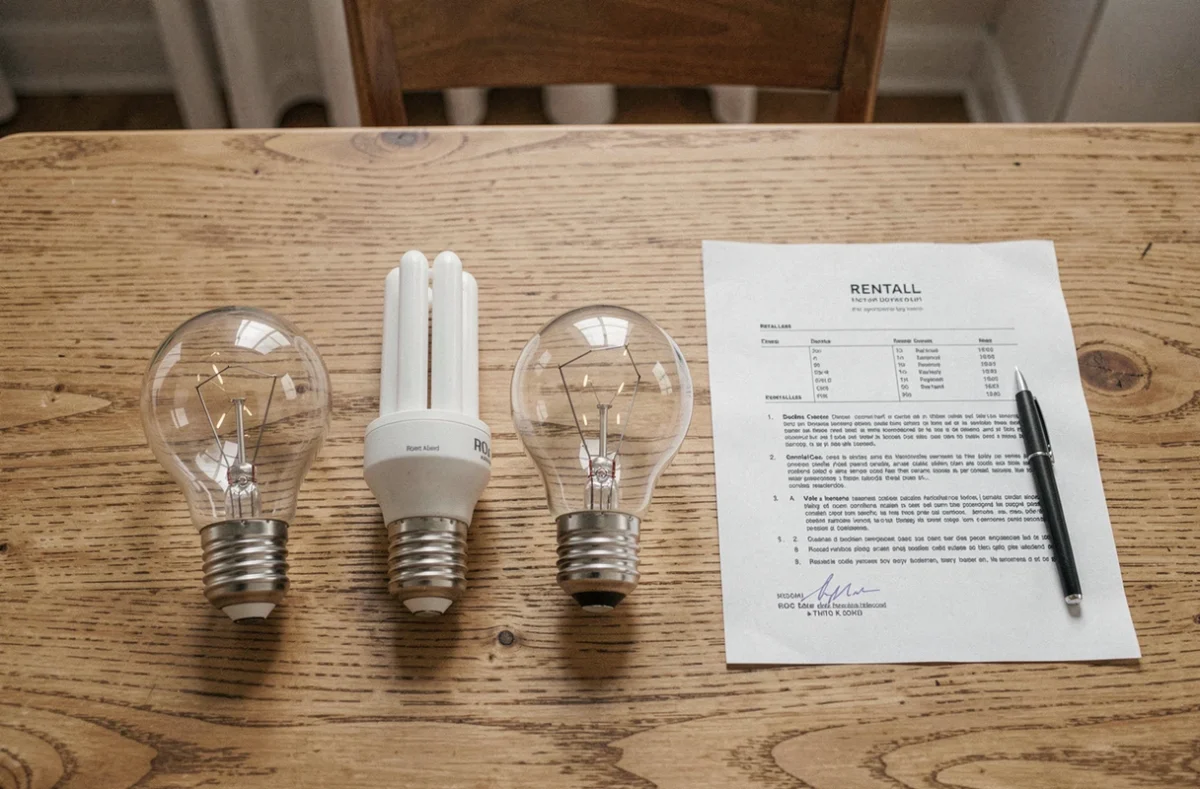
In a furnished rental, the smoke detector is a special case. The landlord is responsible for its initial installation, but replacing the battery or the detector itself during the lease is part of the tenant’s routine maintenance responsibilities, just like replacing a light bulb.
Most disputes about light bulbs in furnished rentals are resolved before they reach court, often through a simple discussion between the parties. A detailed inventory at move-in, prompt communication if there is any doubt about the type of bulb, and an understanding of the 1987 decree are enough to defuse almost any situation.