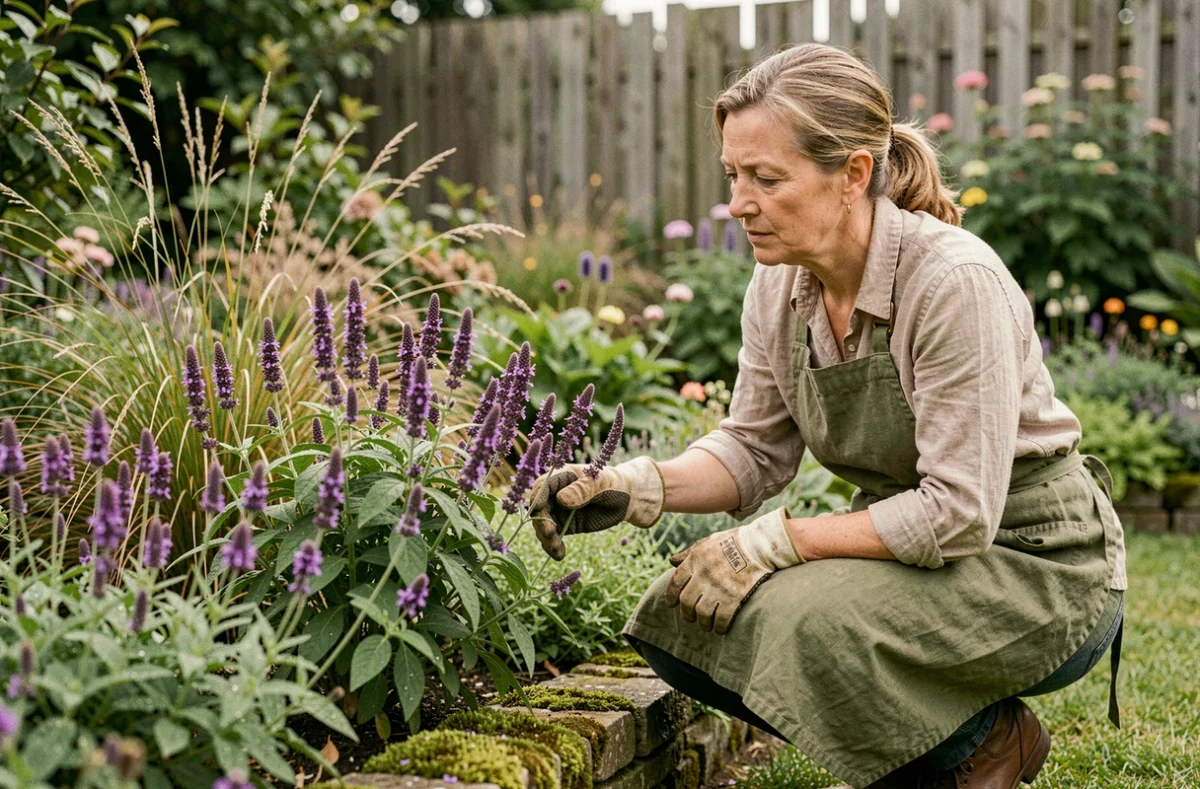
Promesse de Fleurs offers a catalogue of several thousand perennial varieties and has a Trustpilot rating of around 4.4/5, depending on when it is checked. This average, based on a large volume of reviews, sits alongside much harsher feedback on other platforms, such as PagesJaunes (2.4/5 from around thirty reviews). The gap between the promise of the online catalogue and what actually happens in the garden two seasons later deserves a closer look.
Perennials in pots: what the condition of the package doesn’t tell you about how well they’ll establish
Most customer reviews focus on opening the box: careful packaging, plants in apparently good condition, and moist roots. On this front, Promesse de Fleurs receives generally positive feedback, even from its most demanding customers.
The problem starts afterwards. A review published in 2025 reports that ten out of eleven plants died within days of being planted. One isolated case doesn’t make a statistic, but it highlights a blind spot: an intact package doesn’t predict how well a plant will establish in the garden. Root vigor, transport stress, and compatibility with the planting soil all play a part—factors that packaging can’t compensate for.
Promesse de Fleurs sells most of its perennials in small pots. Contrary to popular belief, a small pot doesn’t mean poor quality. A dormant perennial with no visible foliage may establish better than a flowering plant in a large pot, because its energy is concentrated in its root system. The contrast between the modest-looking pot that arrives and the blooms promised on the product page can confuse many buyers, who are quick to judge.
To better understand how Promesse de Fleurs perennials perform once planted, you need to allow at least two full seasons before drawing any conclusions.
Acclimatization and origin: the factor the catalogue doesn’t mention
Promesse de Fleurs is based in northern France. Some of its plants are grown on site or by partner suppliers, but the catalogue doesn’t consistently specify the geographical origin of each batch of perennials. This lack of detail raises a practical question: will a perennial grown in an oceanic climate establish just as well in the calcareous soil of Provence?
In a review published in 2025, one customer said she had a better experience with another nursery because its plants were grown nearby and adapted to the region. This doesn’t prove that Promesse de Fleurs perennials are less suitable, but it does send a clear signal: origin matters just as much as the variety you choose.
What you can check before ordering
- The product page lists hardiness (USDA zone) and recommended soil type, two useful details for filtering varieties that are compatible with your garden.
- The website’s blog offers detailed growing guides, but they remain generic and don’t specify the growing conditions or where the batch being shipped was raised.
- The product pages reviewed don’t consistently mention an EU plant passport, even though regulations require one for plants sold within the European Union.
Limited traceability isn’t unique to Promesse de Fleurs. Most French online nurseries operate in much the same way. The difference lies with local growers, who sell plants grown on their own land.
Promesse de Fleurs’ plant guarantee: what it really covers
The website advertises a guarantee that plants will establish, a selling point featured prominently on the homepage. In practice, the guarantee period and terms vary by plant category, and exclusions aren’t always easy to find at the time of purchase.
Several customer reviews mention prompt replacements when a package arrives damaged or a plant is clearly dead on arrival. Customer service seems responsive in these specific cases. However, reviews are more mixed when a perennial starts to decline three months after planting: some buyers receive store credit, while others are turned down because their growing conditions are deemed unsuitable.
The fundamental problem with any plant guarantee for online sales is that it’s impossible to distinguish a defect in the plant from a planting mistake. No online seller can guarantee success in the garden—only that the plant shipped matches its description. Promesse de Fleurs is no exception.
Promesse de Fleurs perennial prices compared with local nurseries
Promesse de Fleurs’ prices are clearly higher than those of discount retailers, with several comparisons estimating a premium of around 20 to 30%. Some of this is justified by the breadth of its catalogue: rare varieties, cultivars you won’t find at garden centers, ornamental grasses, and collector’s perennials that physical nurseries don’t stock.
For common perennials such as hardy geraniums, daylilies, and sedums, the price difference is harder to justify. A local nursery will often sell the same cultivar in a similarly sized pot, with the added benefits of a plant that’s already acclimatized and in-person advice.
Delivery costs, ranging from six to ten euros depending on the package weight, add to the total. The free-shipping threshold of 60 euros encourages bulk orders, which can lead to impulse purchases of varieties that aren’t suited to the garden. Paradoxically, Promesse de Fleurs’ extensive catalogue can become a trap for buyers who choose plants based on photos without checking their soil and light requirements.
You can’t judge how well perennials will perform in the garden by a Trustpilot rating or the condition of the package on arrival. The real test comes the following spring, when the plant has survived its first winter and starts to fill out.
On this front, data is lacking: neither Promesse de Fleurs nor its competitors publish verifiable one-year establishment rates. The choice still comes down to the variety ordered, the soil it’s planted in, and the gardener’s patience.