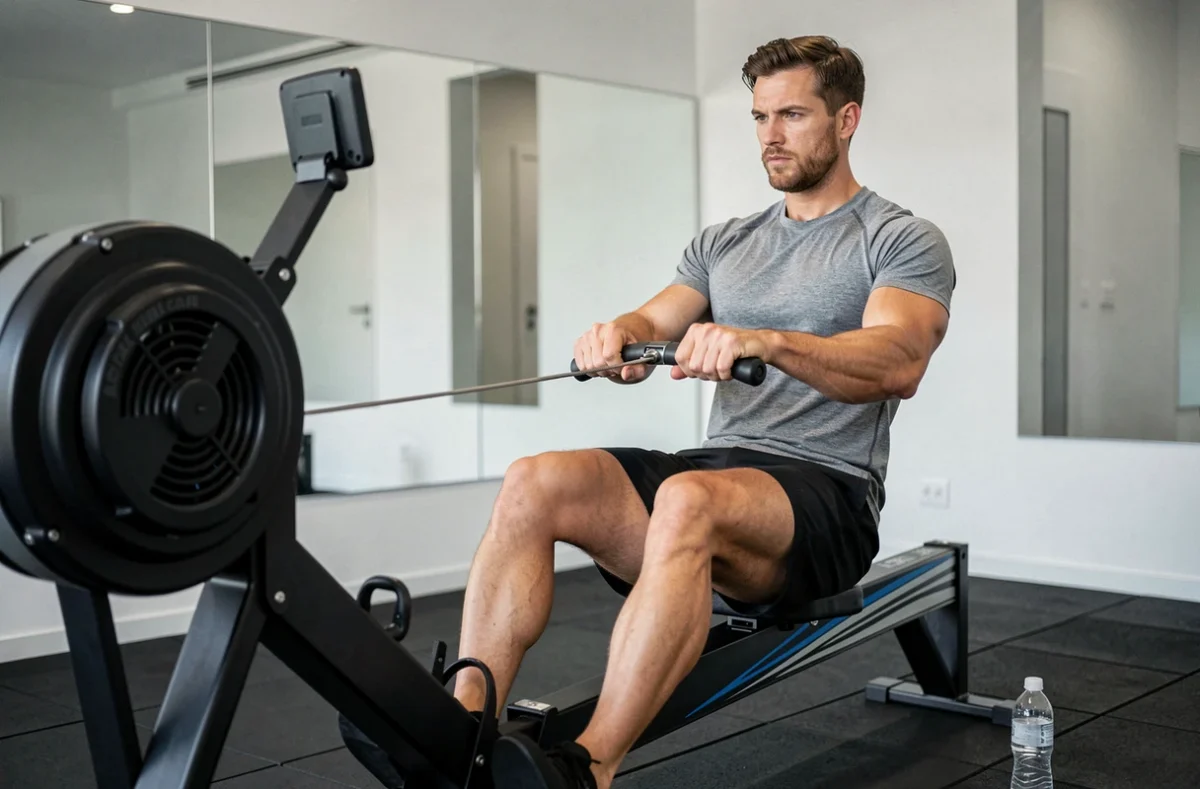
Four resistance systems, three types of rowing strokes, and considerable price differences from one model to another: comparing rowers requires setting the right criteria before looking at the labels. The type of resistance affects the fluidity of the movement, the noise level, and the budget. The type of stroke determines which muscle groups are primarily engaged. This article measures the concrete differences between each technology to identify the one that corresponds to a given use.
Comparison table of resistance types for rowers
Resistance is the primary differentiating factor between rowers. It directly influences the rowing sensation, the noise produced, and the price range.
| Type of Resistance | Rowing Sensation | Noise Level | Indicative Price Range | Suitable Profile |
|---|---|---|---|---|
| Magnetic | Regular, smooth | Very low | Entry and mid-range | Apartment, regular sessions |
| Air | Progressive (the harder you pull, the more resistance increases) | High (fan) | Mid to high-end | Intensive training, rowing preparation |
| Water | Progressive and fluid, close to real rowing | Moderate (water noise) | Mid to high-end | Seeking a natural feel |
| Hydraulic (pistons) | Mechanical, limited range | Low | Entry-level | Tight budget, limited space |
This table summarizes the main points. The following sections detail the differences that matter in daily use. To find advice on Mon Coach A Domicile, the comparison between magnetic resistance and air resistance is particularly well documented.
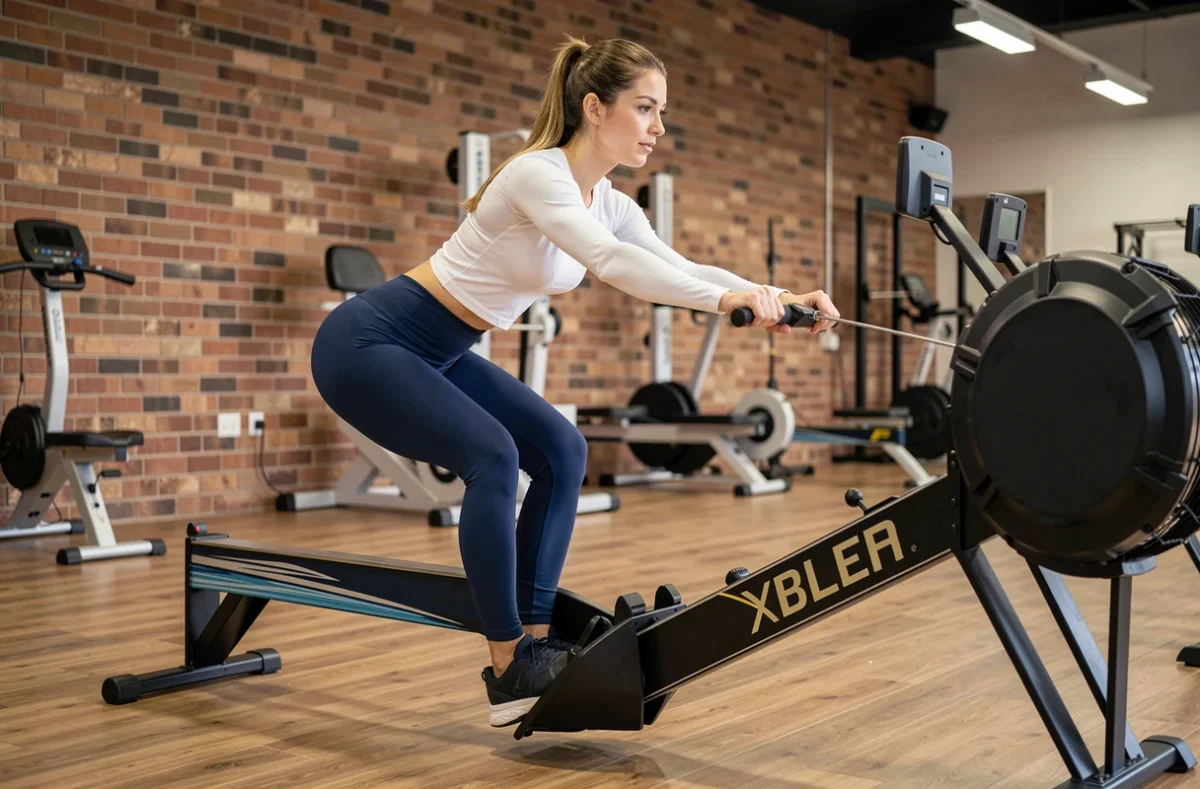
Magnetic, air, or water resistance: what changes in use
Magnetic rower: silence as the main argument
The magnetic brake operates without mechanical contact. Two magnets frame the flywheel, and the resistance is adjusted manually or via the console. The movement remains linear regardless of the rowing pace.
This consistency is an advantage for beginners but a disadvantage for advanced users. The resistance does not adapt to the effort: it remains the same whether you pull slowly or quickly. The magnetic rower is suitable for moderate cardio sessions in an apartment, where noise is a constraint.
Air rower: resistance that follows the effort
On an air rower, the fan wheel brakes proportionally to the pulling speed. The more intense the effort, the higher the resistance. This is the principle used by Concept2, a reference in CrossFit gyms and rowing clubs.
Noise is the compromise to accept. The fan generates an audible rush, incompatible with a shared living room early in the morning. On the other hand, the progressive nature of air resistance replicates the load increase of a real rowing stroke.
Water rower: fluidity at the cost of maintenance
The principle relies on blades submerged in a tank. The amount of water determines the base resistance level, and the pulling speed modulates the effort like on an air rower. The sound produced, a regular splashing, is often perceived as pleasant.
Maintenance constitutes the major difference. The tank requires periodic treatment (purification tablets) to prevent algae growth. Wooden water rowers, like some WaterRower models, also require care for the frame. A water rower demands regular maintenance that magnetic or air models do not require.
Hydraulic rower: a supplementary device
Hydraulic pistons provide mechanical resistance with a limited range of motion. The pulling is often done on two independent arms, which alters the movement compared to a central pull rower. The low price and minimal footprint make it a supplementary device, not a regular training tool.
Type of rowing stroke: central, Scandinavian, or Latin
The type of stroke is less often compared than the resistance, even though it changes the muscle distribution of each rowing stroke.
- The central stroke uses a single handle connected to a chain or strap. The movement simultaneously engages the back, legs, and arms in a symmetrical gesture. This is the most common system on air and water rowers.
- The Scandinavian stroke (vertical) emphasizes the work of the shoulders and upper back. The arms pull upwards, which engages the trapezius and deltoids more.
- The Latin stroke (horizontal) focuses on opening the arms outward. It targets the chest and biceps more intensely than the central stroke.
For overall cardio training, the central stroke remains the most versatile. The Scandinavian and Latin strokes are suitable for targeted strengthening goals but are found on fewer models in the market.
Connectivity and market segmentation of rowers in 2024-2026
According to a buying guide published by L’Équipe in September 2026, the connected mid-range (Bluetooth, Kinomap or Zwift compatibility) has become the norm between 600 and 1,000 euros. Models above 1,500 euros systematically integrate advanced connected features.
This segmentation redistributes the choice criteria. An entry-level magnetic rower without connectivity and a magnetic rower compatible with Kinomap do not offer the same experience, even if their braking system is identical. Connectivity adds guided programs, performance tracking, and sometimes virtual races that change the regularity of use.
The Regulation (EU) 2023/988 on general product safety (GPSR), applicable since December 13, 2024, also requires that a market operator established in the EU be identified for each rower sold to individuals. When purchasing on a marketplace, checking for the presence of this operator on the product sheet helps eliminate non-compliant models.
The choice of a rower is based on three measurable data: the type of resistance, the type of stroke, and the level of connectivity. An air rower with a central stroke remains the configuration closest to rowing. A connected magnetic rower represents the best compromise between silence and features for regular home use. The budget guides the final decision, but resistance determines the rowing sensation much more than the displayed price.