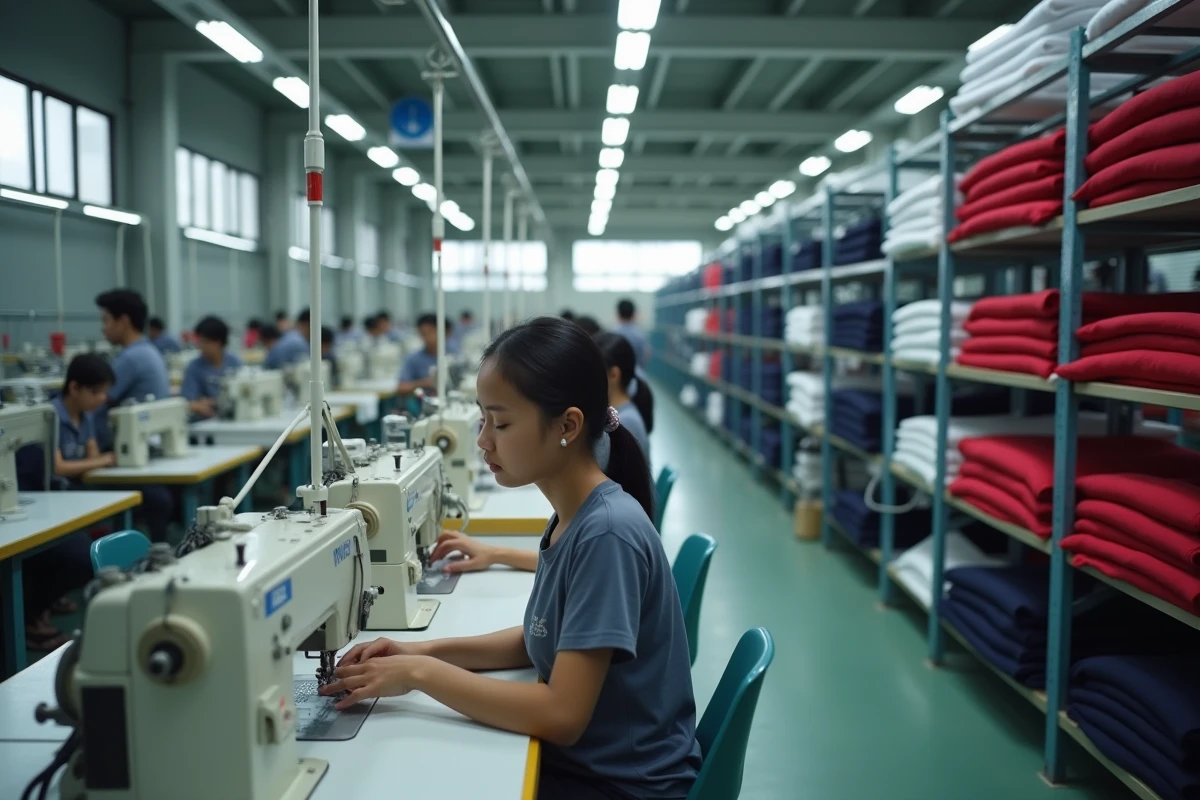
Tommy Hilfiger has maintained a “classic American cool” positioning since 1985, but the reality of its production chain tells a different story. The brand, a subsidiary of the PVH group with its operational headquarters in Amsterdam, does not own any factories. All manufacturing relies on a network of subcontractors spread across several continents, with notable variations depending on the product lines.
“Imported” Label on Tommy Hilfiger Product Listings: What It Really Means
We observe a phenomenon rarely discussed in industry analyses: on the North American online store, the “Origin” section of product listings is limited to the mention “Imported” without specifying the country of manufacture. This practice, verifiable on several men’s references (linen and cotton T-shirts, Script monogram embroidered models, knit-trimmed T-shirts), contrasts with the marketing discourse focused on transparency.
This opacity is not an oversight. North American regulations require indicating if a product is imported, but do not mandate specifying the country of manufacture on the online channel. Tommy Hilfiger exploits this latitude, making traceability impossible for consumers who purchase solely through the official site. Only the physical label sewn into the garment mentions the actual country.
To delve deeper into the country of origin of Tommy Hilfiger clothing, one must turn to textile labels or customs databases, rather than online listings.
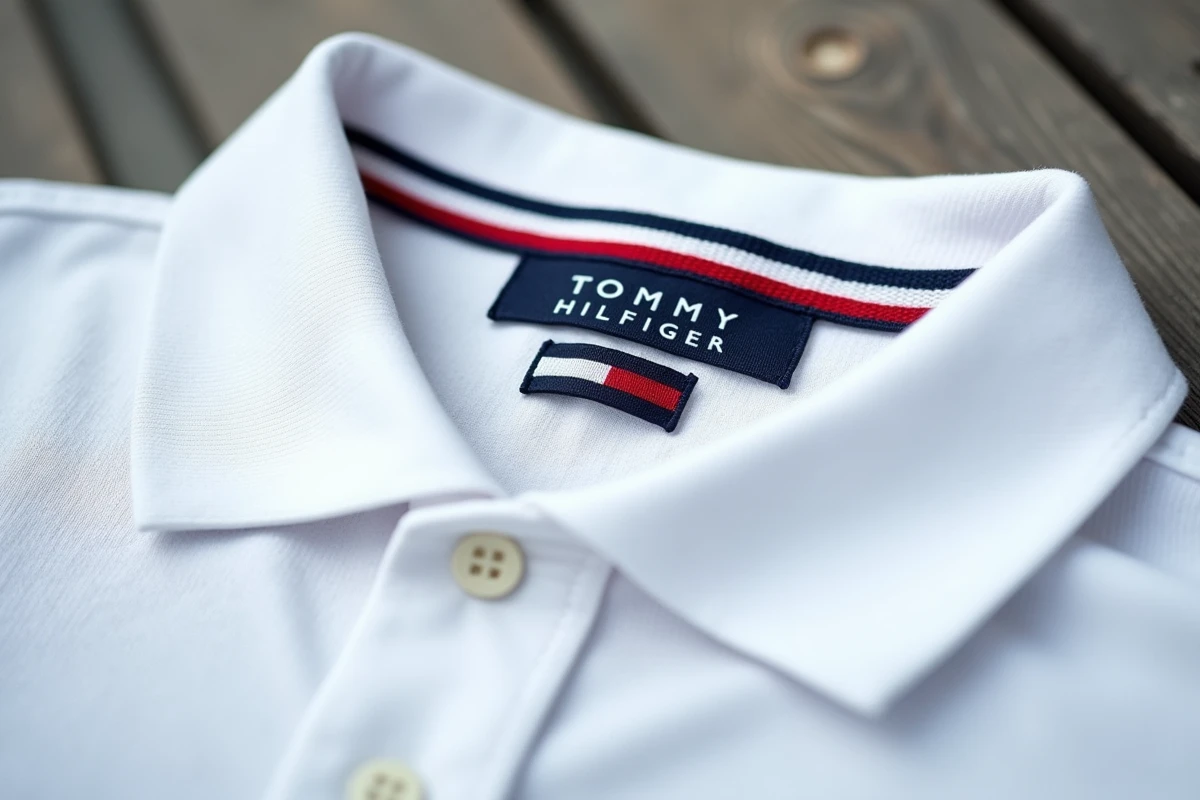
Country of Manufacture for Tommy Hilfiger Clothing: The Real Geography of Production
Tommy Hilfiger’s production relies on well-identified industrial basins. Vietnam plays a central role in the manufacturing of sportswear and casualwear lines. China remains a major supplier, particularly for pieces with a high technical component (jackets, lined coats). Bangladesh and India complete the setup, mainly for volumes of T-shirts, polos, and basic shirts.
No Tommy Hilfiger piece is manufactured in the United States, despite the American identity claimed by the brand. The headquarters is in the Netherlands, design is split between Amsterdam and New York, and manufacturing is done entirely in Asia and, for certain lines, in Eastern Europe.
Distribution by Product Type
- T-shirts, polos, and basic cotton items: mostly manufactured in Bangladesh and India, where labor costs remain the lowest in the industry
- Jeans and denim pants: production concentrated in Vietnam and China, where workshops have specific washing and treatment capabilities for denim
- Jackets, coats, and technical pieces: primarily China, for skills in multilayer assembly and lining integration
This distribution is not fixed. We observe regular transfers of volumes from one country to another, depending on tariff constraints, logistical timelines, and available capacities at subcontractors.
Regenerative Cotton and Material Strategy: Tommy Hilfiger’s Recent Shift
Since 2023-2024, Tommy Hilfiger has integrated regenerative cotton into several references of the men’s collection. Product listings explicitly mention “100% regenerative cotton” on certain T-shirts, with a description of the associated agricultural practices: improving soil health, supporting biodiversity.
This material positioning marks a break from conventional cotton, which constituted the historical basis of the collections. Regenerative cotton goes beyond organic cotton in one specific aspect: it does not merely eliminate chemical inputs; it actively aims to restore agricultural ecosystems.
Material Differentiation by Lines
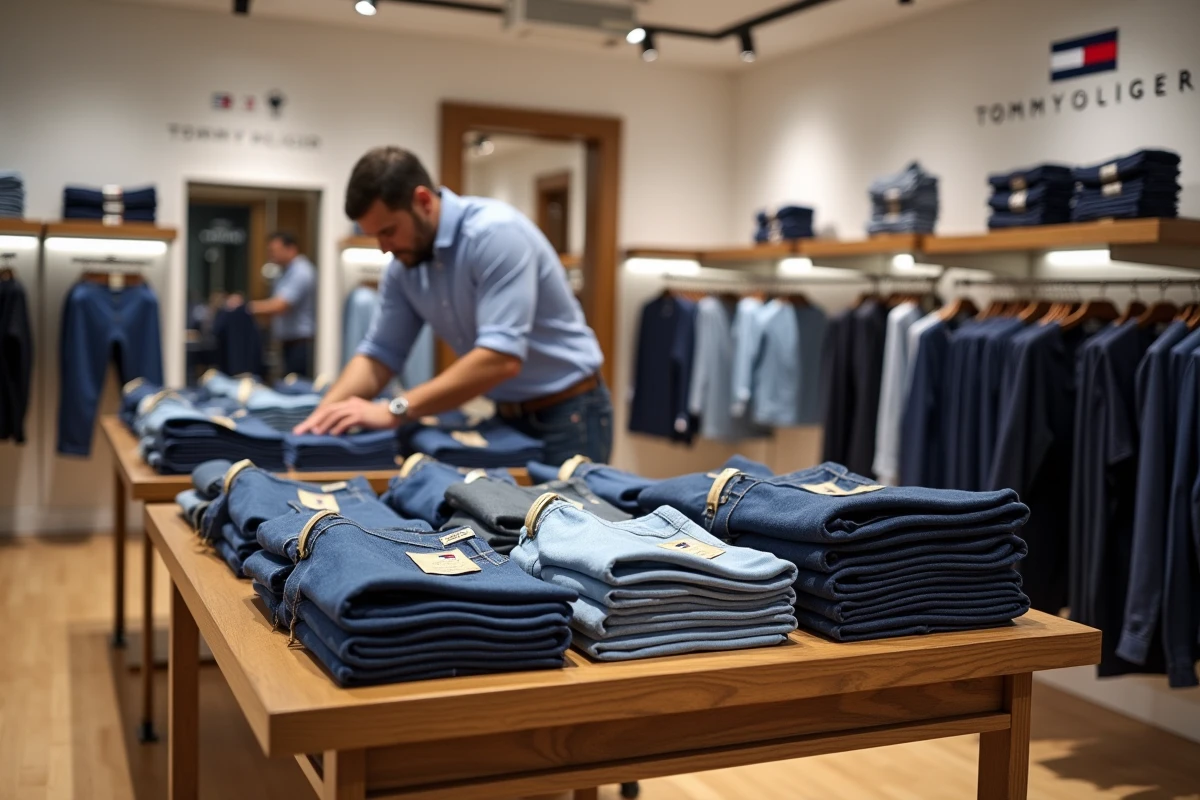
Tommy Hilfiger segments its collections with a clear material strategy. Premium lines (such as New York Label) use linen-cotton blends or regenerative cotton. Terry toweling T-shirts target summer use with a high-end casual positioning. Basics remain in conventional cotton.
Material becomes a more reliable range marker than the country of manufacture. A T-shirt made from regenerative cotton and a T-shirt made from standard cotton can come from the same workshop in Bangladesh, but their price positioning and communication differ radically.
Perceived Quality and Industrial Reality: Decoding Tommy Hilfiger Labels
The PVH group, owner of Tommy Hilfiger and Calvin Klein, applies standardized specifications to all its subcontractors. Quality controls focus on seam strength, color retention after repeated washes, and size compliance. This uniform framework explains why two garments made in different countries can exhibit comparable finishing quality.
Thus, the mention of the country on the label does not inform about the intrinsic quality of the product. It simply indicates where the final assembly took place. Fabrics, threads, buttons, and zippers may come from suppliers located in countries other than the one of manufacture.
- A polo assembled in Vietnam may use cotton spun in India and buttons made in China
- A jacket sewn in China may incorporate a lining woven in Japan
- Woven labels and branding elements are often produced in specialized workshops separate from the manufacturing factory
This fragmentation of the value chain is the norm in the accessible premium ready-to-wear sector. Tommy Hilfiger is no exception, but the brand communicates little about this logistical reality, preferring to highlight the American stylistic identity and, more recently, material commitments such as regenerative cotton.
The country of origin printed on the label remains a partial indicator. To assess the actual quality of a Tommy Hilfiger piece, we recommend cross-referencing the textile composition, the collection line (basic, New York Label, Adaptive), and the fabric weight, rather than relying solely on the “Made in” label.