Luxens paint, the store brand of Leroy Merlin, occupies a unique place in the DIY aisles. Its attractive price draws in individuals who repaint their own walls and ceilings. However, user feedback reveals notable performance discrepancies depending on the chosen reference, color, and substrate. Measuring these discrepancies allows us to know precisely where this paint excels and where it shows its limits.
Wash resistance class: a technical gap within the Luxens range
A point rarely highlighted concerns resistance to wet cleaning, standardized according to ISO 11998. Within the Luxens range itself, performance varies significantly.
| Luxens Reference | ISO 11998 Class | Recommended Use |
|---|---|---|
| Luxens Biobased (Ecolabel) | Class 2 | Walls and ceilings, living areas |
| Luxens bathrooms and kitchens | Class 4 | Wet rooms |
Class 2 resists washing better than class 4. Counterintuitively, the reference intended for wet rooms therefore withstands repeated cleanings less effectively than the Biobased version designed for dry areas.
This discrepancy can be explained by the formulation: the bathroom paint includes anti-mold agents and a microporous barrier that allows the wall to breathe, at the expense of surface hardness. For a kitchen wall exposed to grease splashes, this technical compromise should be anticipated. Completing your reading with the reviews provided by Immo et Habitat allows for cross-referencing these observations with other user feedback.

Ecolabel certification and emissions: not all Luxens references are equal
The Luxens range has diversified towards formulas with a lower environmental impact. The Luxens Biobased references are based on plant resins and packaging that includes recycled plastic. Some carry the European Ecolabel certification.
In contrast, the Luxens paint for bathrooms and kitchens is marked as non-Ecolabel certified product on its technical data sheet, despite an A+ indoor emissions classification. Generalizing the environmental qualities to the entire brand would therefore be a mistake.
- The certified Biobased references guarantee a maximum threshold of volatile organic compounds (VOCs) compliant with the European specifications
- The A+ classification (indoor air emissions) is common to most water-based paints sold in France, including those outside the Luxens range
- No Ecolabel certification is present on the anti-mold and facade references, which meet other technical constraints
Before purchasing, checking the product sheet of the exact reference remains the only reliable way to know the certification level.
Coverage and finish according to color and substrate
Recent user feedback confirms a recurring observation: the result heavily depends on the chosen color and substrate. A matte white on plasterboard generally covers well in two coats. Strong shades, particularly dark grays and blacks, often require an additional coat to achieve a uniform finish.
Matte finish on walls and ceilings
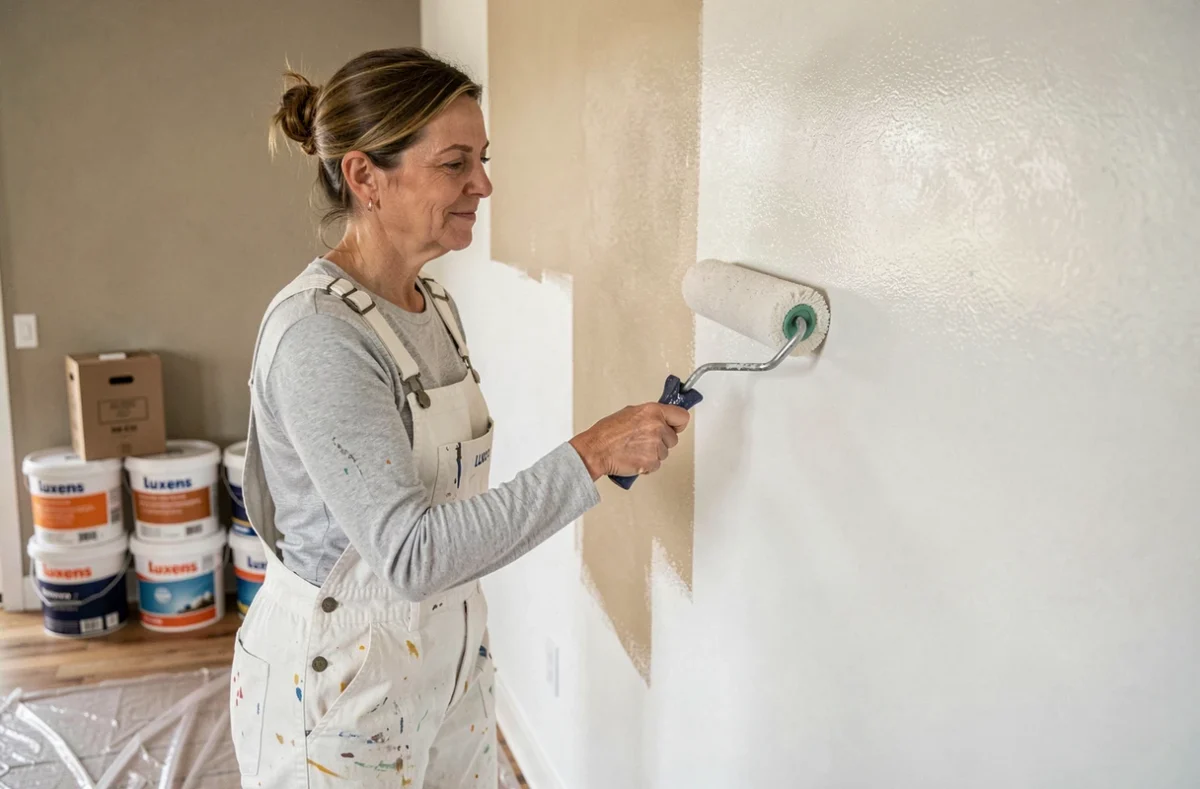
The matte finish remains the strong point of the range for living areas. Roller application offers a decent spread, with a relatively short drying time between coats for a water-based paint. Cleaning tools with water simplifies the job.
Users who have prepared their substrate (primer, light sanding, dusting) report satisfactory results. Conversely, direct application on an unprepared wall visibly degrades the finish, leaving roller marks and uneven coverage.
Satin finish and brush
The satin finish proves to be more demanding. Brush work in corners and edges sometimes leaves more visible marks than with a roller. Feedback indicates that the drying time, slightly longer for satin finish, requires strict adherence to the timing between coats to avoid thick spots.
Luxens anti-mold paint: results and limits in real conditions
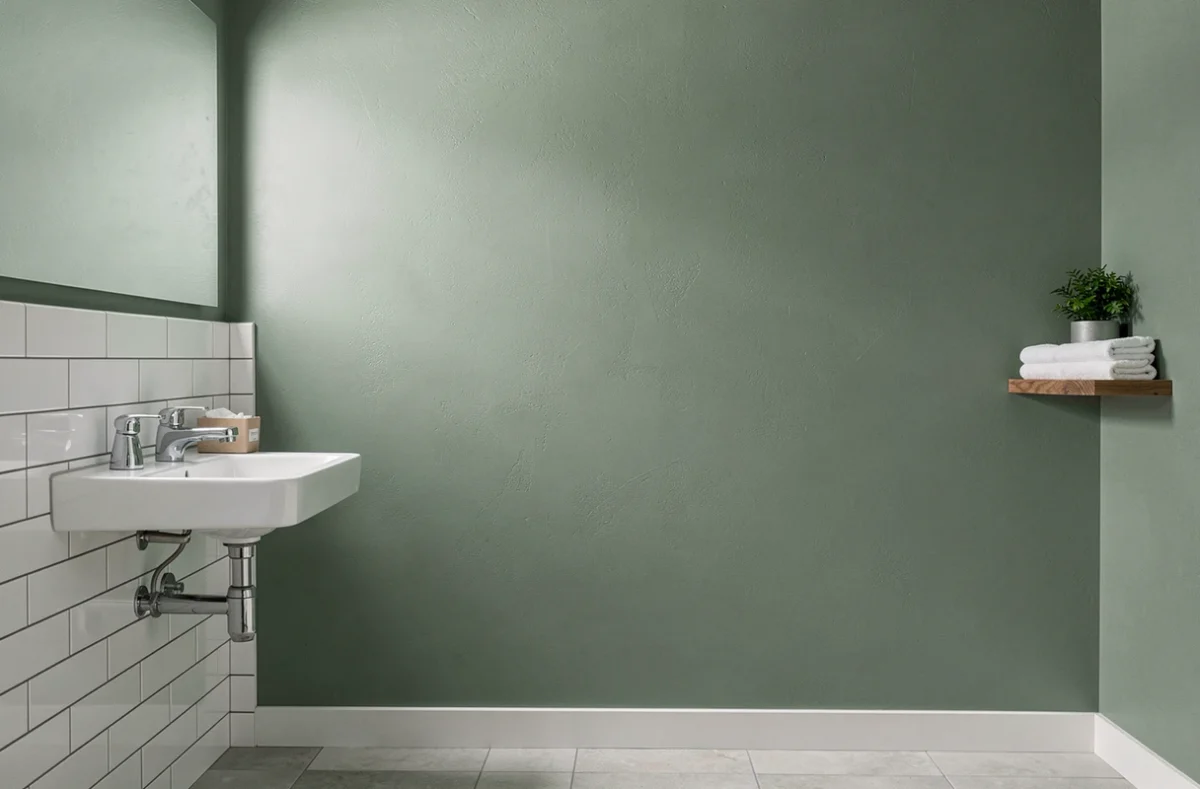
The anti-mold reference was tested in a poorly ventilated bathroom. On a healthy wall, it effectively prevents the reappearance of black stains related to light condensation. The microporous barrier allows the wall to breathe, limiting moisture accumulation on the surface.
Limits appear on a previously degraded substrate. Without prior fungicidal treatment, the paint does not eliminate existing mold. It acts as a preventive measure, not a cure. Users who neglected this step report a reappearance of stains within a few months.
- On a healthy wall with adequate ventilation: durable results observed over several weeks
- On a degraded wall without treatment: almost total ineffectiveness, mold penetrates the paint layer
- The price per liter remains significantly lower than specialized anti-mold treatment brands, making it a coherent preventive option for tight budgets
The average rating of 4.2 out of 5 based on over 36 verified reviews for this reference confirms overall satisfaction, tempered by cases where substrate preparation was insufficient.
Choosing a Luxens paint benefits from being guided by the technical data sheet of each reference rather than the overall brand image. Wash resistance class, Ecolabel certification, behavior according to color: these three technical criteria separate a successful result from disappointment. The price remains a real asset, provided that one does not skimp on substrate preparation.