
The tech market in 2026 is no longer just about smartphone launches or software updates. Several driving forces are restructuring the sector profoundly: artificial intelligence is moving beyond conversational frameworks, European regulations are coming into concrete effect, and cybersecurity issues extend well beyond the scope of screens. Mapping these movements allows us to distinguish sustainable trends from marketing noise.
Agentic AI: when software plans and executes without direct supervision
The term appears in most industry analyses of the year: agentic AI refers to programs capable of planning and executing tasks, not just answering questions. The McKinsey Technology Trends Outlook 2026, published in September and updated in early October, identifies this category as a distinct emerging field, separate from traditional conversational assistants.
Specifically, these software agents chain actions in sequence: information retrieval, comparison, intermediate decision-making, execution. They are found in supply chain management, assisted scientific discovery, or product engineering. Their uniqueness lies in operating with a degree of autonomy that raises new questions about human validation of results.
To keep up with developments on this topic and other industry news, Le Bon Geek’s news regularly covers advancements in artificial intelligence and tech products.
Field reports diverge on one point: the reliability of these agents in uncontrolled environments. In the lab, demonstrations impress. In production, cases of cascading errors (an agent making a wrong decision that triggers others) remain a documented obstacle by several research teams. Software autonomy is progressing faster than the safeguards that frame it.

European AI Act: transparency rules come into effect
The regulatory framework has ceased to be theoretical. The European AI Office began applying certain rules of the AI Act on August 2, 2026, particularly the transparency requirements for interactive systems. Any technology that interacts with a user must now clearly indicate its artificial nature.
This obligation applies to chatbots, voice assistants, image generators, and deepfakes. Companies deploying these tools in Europe must adapt their interfaces, under penalty of sanctions.
A specific aspect deserves attention: AI assistants aimed at children are subject to dedicated regulation. The European Union has introduced requirements for designing technologies suitable for minors, an angle that goes beyond mere product performance to touch on the responsibility of publishers. The available data does not yet allow for measuring the real impact of these rules on industrial practices, but the regulatory signal has been set.
What this changes for manufacturers and publishers
Tech companies operating in the French and European markets now integrate regulatory compliance from the design phase. It is no longer an adjustment at the end of the cycle. Legal and technical teams work in parallel, which alters the timeframes for bringing certain connected products and online services to market.
Cybersecurity of physical objects: robots, drones, and connected equipment
Cybersecurity is no longer confined to servers and workstations. The McKinsey report describes 2026 as the moment when technology acts more in the physical world, significantly expanding the attack surface. Industrial robots, delivery drones, autonomous vehicles: each connected object becomes a potential target.
- Domestic and industrial robots carry sensors and communication modules that can be compromised remotely, with direct physical consequences
- Autonomous delivery vehicles, identified among the trends for 2026, depend on constant connectivity, the interruption or manipulation of which poses logistical and security risks
- Edge AI, which processes data at the network’s edge, reduces latency but multiplies entry points for targeted attacks
Preventive and predictive cybersecurity, based on behavioral analysis, attempts to address this dispersion of threats. Systems learn to detect anomalies before an attack materializes. However, the diversity of equipment and protocols makes standardizing protections particularly complex.
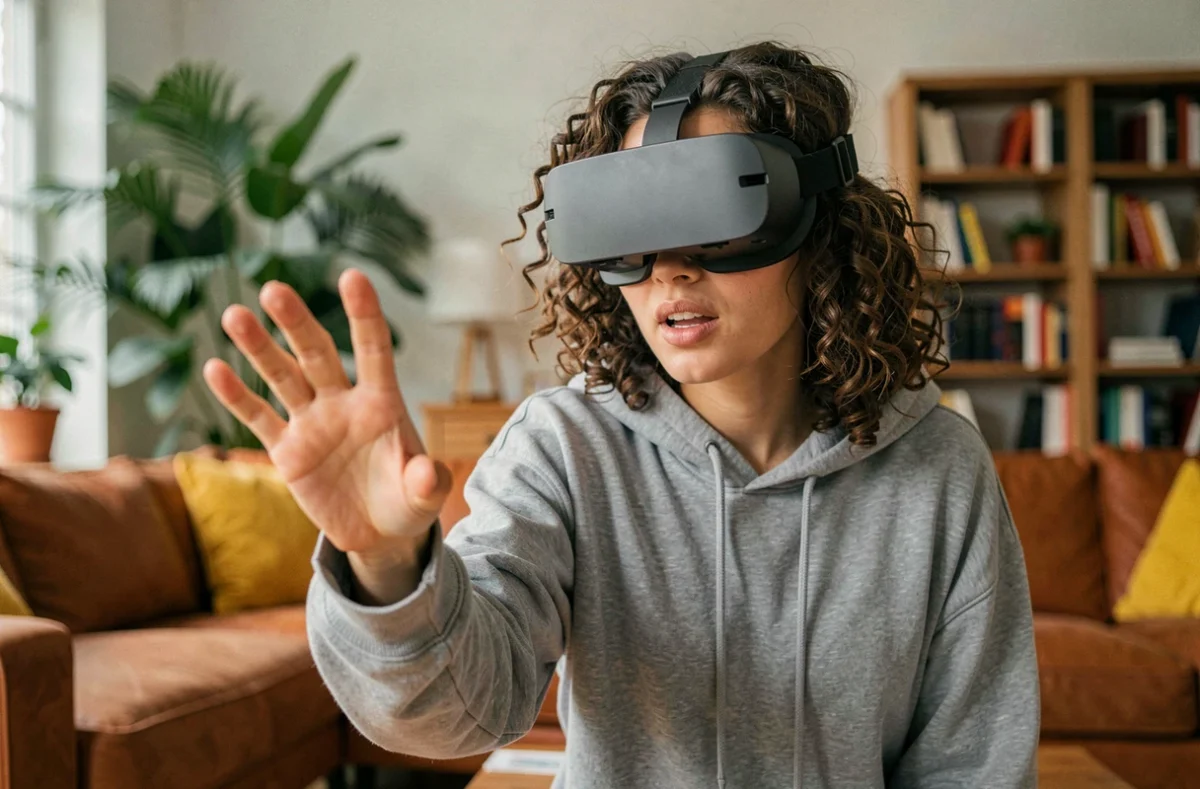
Immersive technologies and advanced connectivity: beyond the gadget
Extended reality (AR, VR, MR) reaches a functional milestone in 2026. The integration of natural interfaces (gesture recognition, eye tracking, haptic feedback) transforms these tools into work instruments in industry, training, and maintenance. A technician can interact with complex data without manipulating traditional peripherals.
5G connectivity and preparatory work on 6G support this evolution. The reduction in latency enables real-time uses that were not viable two years ago: remote-assisted surgery, industrial drone piloting, supervision of logistics sites.
The point of caution remains the infrastructure cost. The large-scale deployment of these technologies requires heavy investments, and their actual adoption in French companies varies by sector. Consolidated data on the return on investment of this equipment is still lacking to draw general conclusions.
Consumer product trends to watch
On the consumer side, wireless headphones continue to progress with real-time translation features and health tracking. Connected scales incorporate increasingly detailed body analyses. The boundary between tech products and health devices is blurring, which could eventually raise questions of medical certification.
The market for refurbished products is also gaining structure, driven by environmental concerns and rising prices for new items. Several French brands are expanding their refurbished ranges with warranties aligned with new products.
The year 2026 does not produce a spectacular break but a simultaneous maturation of several sectors. Agentic AI redefines what software can do alone, European regulation sets concrete limits, and cybersecurity adapts to a world where physical objects are as vulnerable as servers. These three axes structure the tech landscape for the coming months, with implications that far exceed the circle of novelty enthusiasts.