When renovating your kitchen, the first instinct is often to choose the appliances or the countertop. The style comes later, almost by default. This is a mistake that can be costly in terms of coherence. The kitchen style dictates the choice of materials, facades, colors, and even ventilation. It’s better to start from there.
Air quality and materials: the technical criterion that kitchen styles ignore
There is a lot of talk about wood, matte black, or glossy lacquer. There is very little discussion about what these materials emit once installed in a closed, heated, humid space.
Recent recommendations link kitchen design to effective ventilation, a properly sized hood, and the choice of low-emission materials. Panels rated A+ for indoor air emissions or E1 for formaldehyde should be prioritized, regardless of the chosen style.
Specifically, if you opt for facades made of reconstituted wood or lacquered MDF, checking the emission rating before confirming the order changes the game in the long term. A modern style with handle-less facades made from cheap panels can degrade air quality much more than a rustic kitchen made of solid oak.
By exploring kitchen styles on Chapeau Melon, you can find the major aesthetic families, but this health filter still needs to be considered with each finishing choice.
Modern kitchen with matte black facades: what it implies in daily life
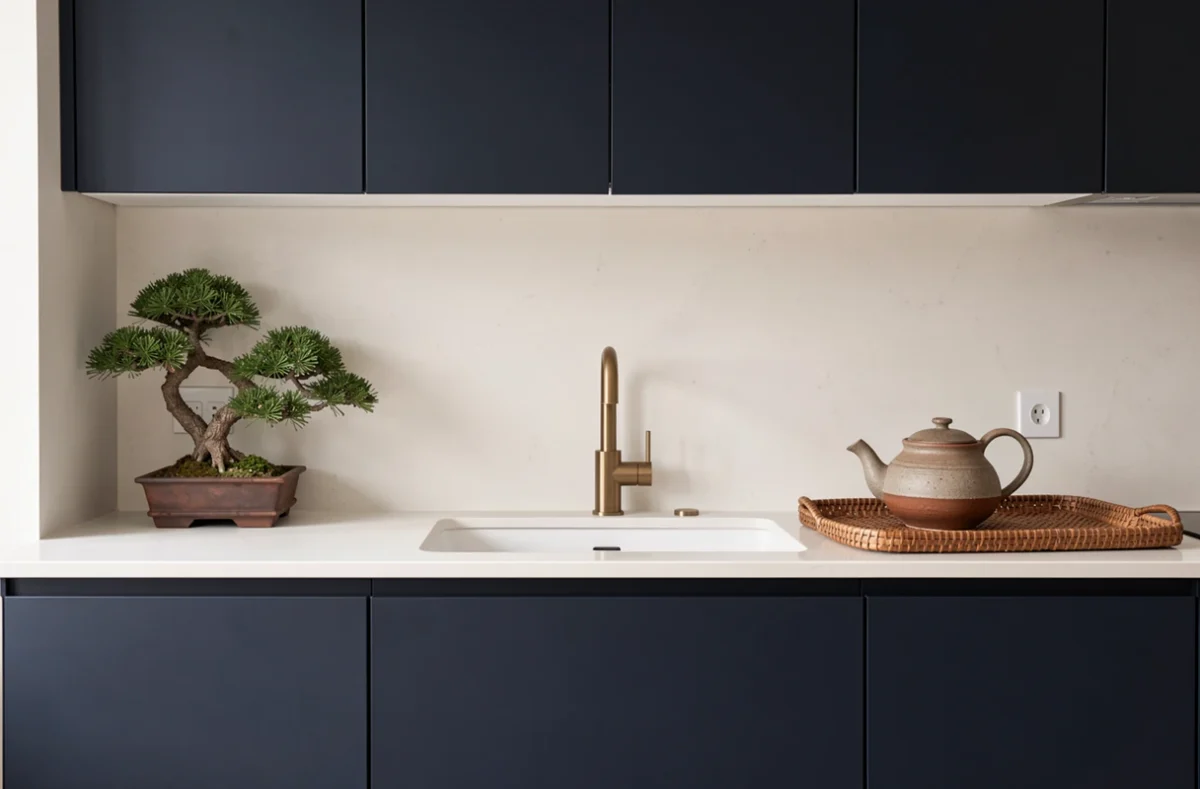
Black is everywhere in kitchens presented as trendy. Matte facades, dark countertops, black faucets. In photos, the result is striking. In real use, the feedback varies on this point.
Fingerprints and micro-scratches are more visible on matte black than on a light shade or veined wood. A wipe with a damp sponge leaves rings if the product is not suitable. For a family that cooks every day, this means more frequent maintenance than with light or textured facades.

Black works better in very bright kitchens, with sufficient natural light or well-thought-out linear lighting. In a north-facing room with a single window, the effect can crush the volume and darken the workspace.
If you are committed to a dark modern style, a good compromise is to limit black to lower cabinets and keep lighter tones above. Softer colors on upper cabinets or the backsplash rebalance brightness without betraying the decorative intent.
Wood and textured facades: the style that withstands trends
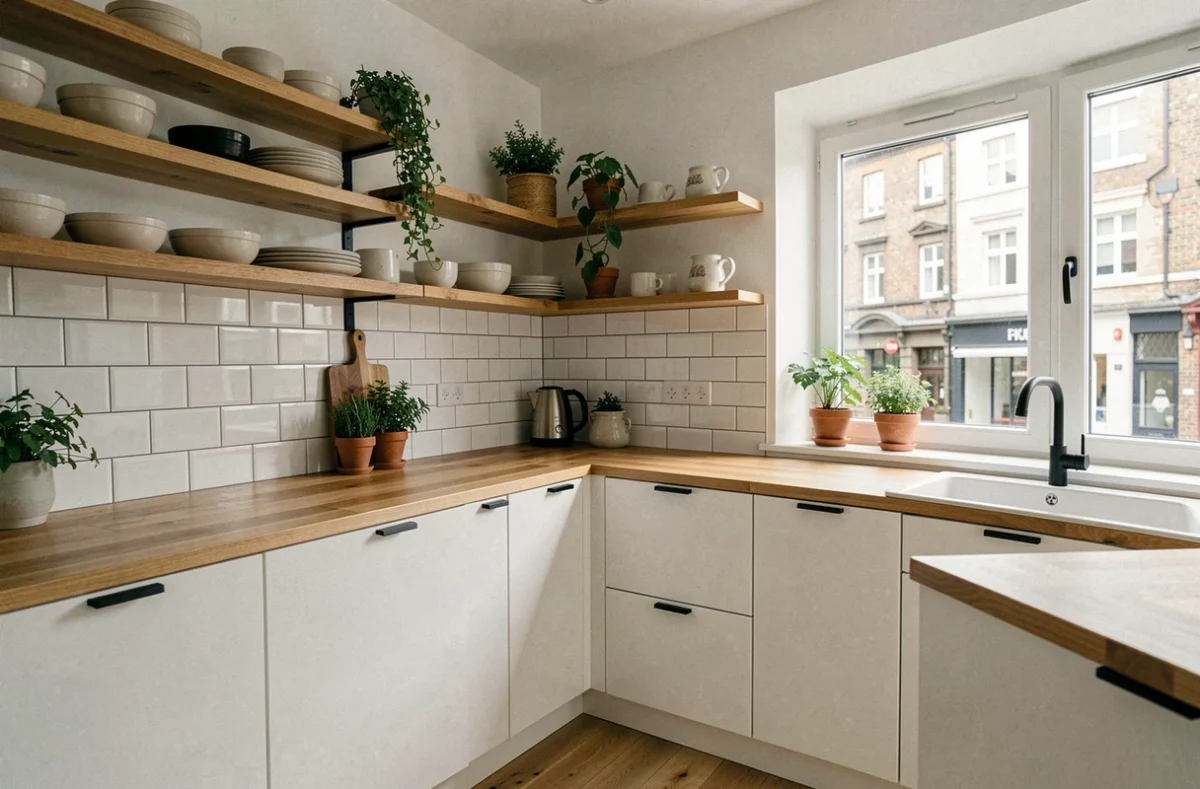
Wood-finish facades are making a strong comeback, but not in the rustic version of twenty years ago. We are talking about light oak veneers, fluted textures, and wood combined with mineral surfaces. This style endures over the years because it masks wear and matches almost all wall colors.
Light wood combined with a neutral-toned countertop remains the most versatile base for a kitchen that needs to last. You can change the backsplash, handles, or lighting without starting over.
Here are some guidelines for choosing wood facades:
- Real veneer ages better than printed melamine decor, but costs significantly more. If the budget is tight, a good-quality melamine with an ABS edge can last several years.
- Structured finishes (vertical grooves, fluting) add relief and hide everyday bumps better than a smooth surface.
- On a central island, wood on the front facade and a composite material countertop create a contrast that works well in both Scandinavian and contemporary styles.
Sorting organic waste and layout: a new element to integrate into the design
As of January 1, 2024, every household must have a solution for sorting food waste at the source. In the kitchen, this translates to an additional space to plan for, whether it’s a ventilated bin integrated under the sink, a dedicated drawer, or a spot for a nearby composter.
Sorting organic waste significantly changes the organization of lower cabinets. In a minimalist kitchen with very few visible storage options, this volume must be anticipated from the design stage. A 30 cm wide unit is sufficient, but it must be ventilated to avoid odors, especially in summer.
This aspect is rarely mentioned in kitchen catalogs, but it affects usability as much as the choice of style. A sleek design that requires leaving a visible bin on the countertop loses some of its appeal.
Removable kitchens and reuse: the sustainable style takes shape
Eco-design goes beyond the simple use of natural materials. A professional report published in September 2026 presents the integration of healthier materials and the reduction of environmental impact as a structural evolution of the market.
In practice, this translates to kitchens designed to be disassembled, repaired, and reused. The relevant distributors must take back old appliances for free when purchasing new equipment. Some furniture brands must also take back used furniture of the same category.
Choosing a kitchen style also means deciding on its lifespan. A kitchen with standard modules that are screwed (not glued), interchangeable facades, and a replaceable countertop without needing to dismantle everything offers more flexibility than a custom monobloc set.
Trends come and go. A well-designed kitchen, with healthy materials, appropriate lighting, and a space thought out for the real constraints of daily life, remains relevant well beyond the next decor cycle.