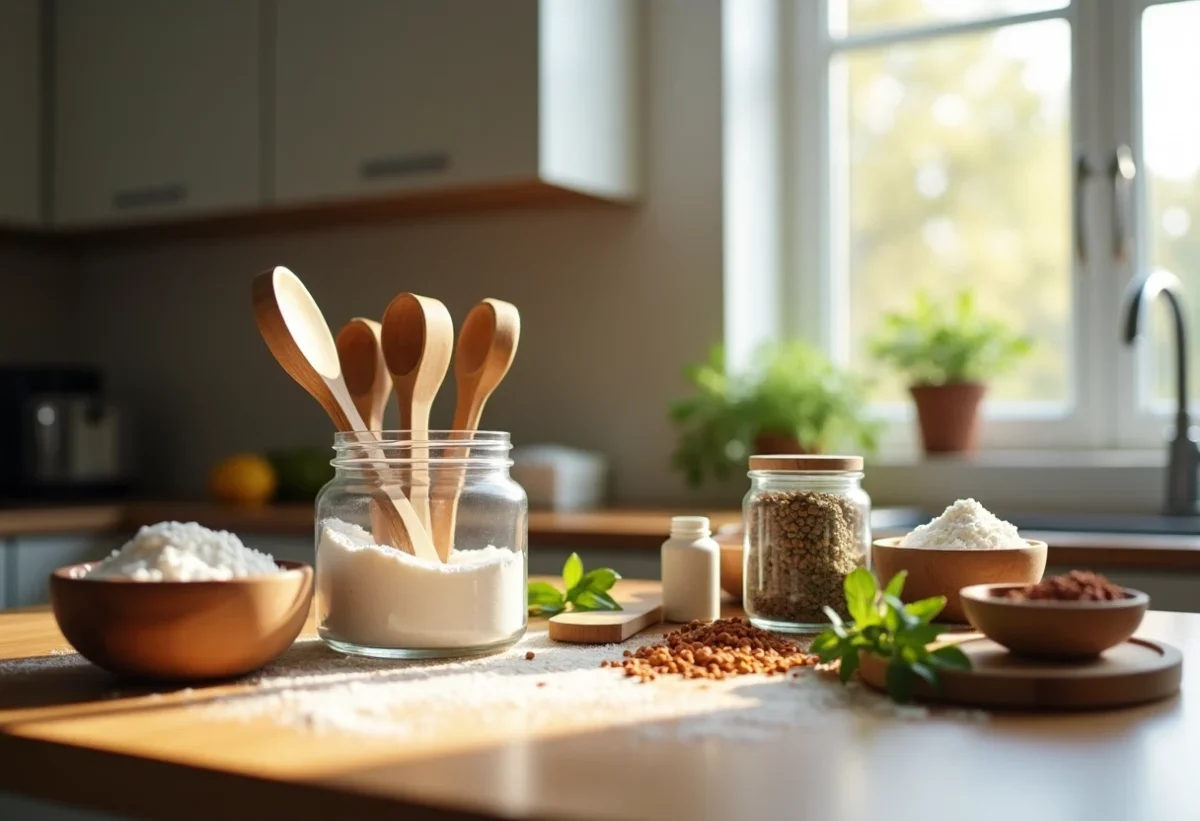
Preparing a perfect meal often requires special attention to the measurement of ingredients. A pinch of salt too much or a missing tablespoon can turn a promising recipe into a culinary disappointment. To avoid these missteps, one must master a few simple yet effective tips.
Equipping yourself with the right measuring tools can make all the difference. An accurate kitchen scale and standardized measuring spoons are indispensable allies. It is important to understand the equivalences between different units of measurement, especially when following recipes from various origins.
The Basics for Properly Measuring Ingredients
A balanced meal consists of several essential elements:
- vegetables,
- whole grains,
- animal or plant proteins,
- healthy fats,
- spices and herbs,
- and water.
This composition applies to both lunch and dinner. Let’s see how to measure these ingredients to achieve culinary harmony.
Vegetables and Whole Grains
Vegetables should take center stage on the plate. Count about 200 to 250 grams of vegetables per person. For whole grains, a portion of 60 to 80 grams of quinoa, brown rice, or whole wheat pasta is sufficient. The amount of rice per person is often a source of confusion: 60 grams uncooked is approximately 180 grams cooked.
Proteins and Healthy Fats
Proteins, whether animal or plant-based, should represent 100 to 150 grams per person. Opt for fish, lean meat, legumes, or eggs. Healthy fats, such as olive oil or avocado, should be used sparingly: one tablespoon per meal is ideal.
Spices, Herbs, and Water
Spices and herbs are not just flavor enhancers; they also provide nutritional benefits. Use them generously, but without excess to avoid masking the natural flavors of the foods. Don’t forget water: a glass of water per meal aids digestion and complements daily hydration.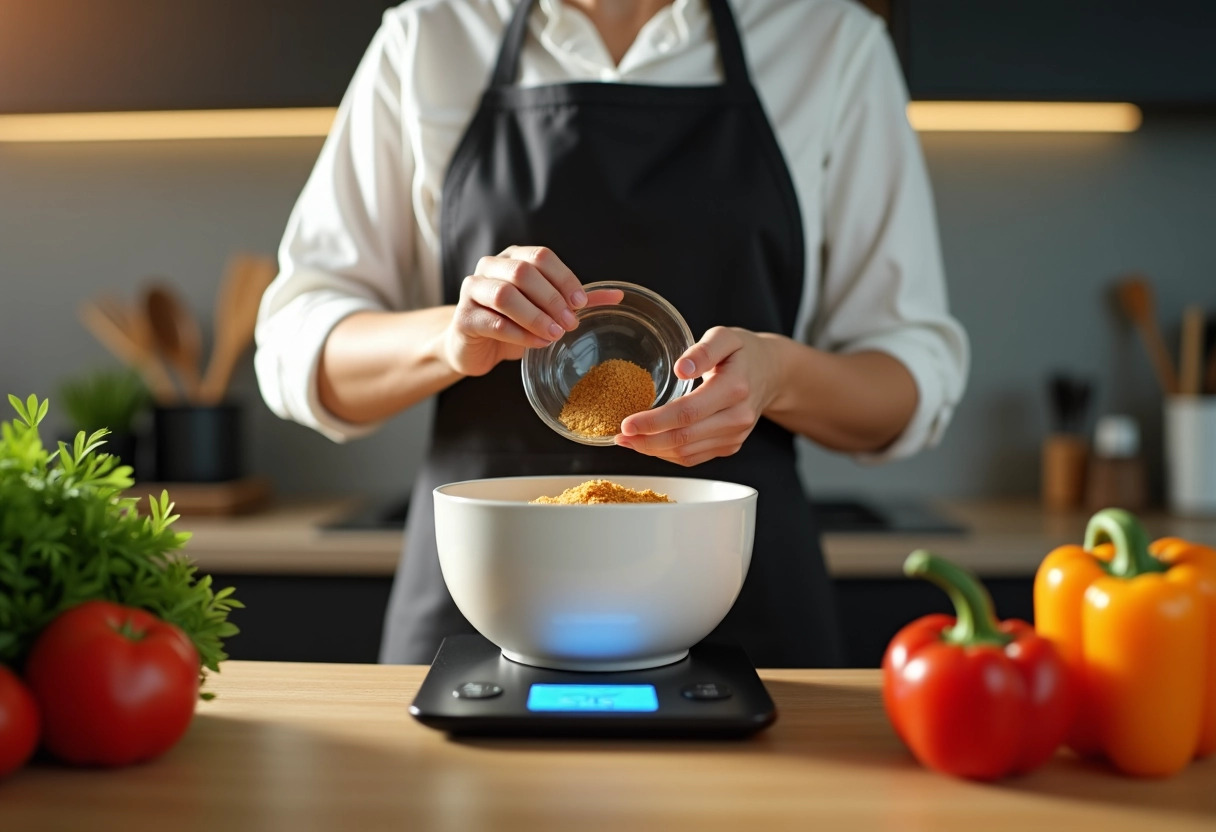
Practical Tips for Perfect Measurement
To achieve perfect measurement of ingredients, some simple yet effective tips can make all the difference. Here are a few recommendations to refine your meals, whether they are intended for athletes or families looking to eat balanced.
Use Measuring Tools
Measuring tools, such as kitchen scales and measuring cups, allow for precise portion quantification. Use them to weigh grains, vegetables, and proteins. This ensures that each portion is adequate and avoids excess.
- Kitchen scale for vegetables and proteins
- Measuring cups for grains
- Measuring spoons for spices and herbs
Plan Your Meals
Plan your meals in advance to avoid common mistakes. Create a shopping list that includes the four categories: fresh fruits and vegetables, healthy proteins, quality grains, healthy oils, and spices for seasoning. This ensures you always have the right ingredients on hand.
| Category | Examples |
|---|---|
| Fresh fruits and vegetables | Carrots, spinach, oranges |
| Healthy proteins | Fish, tofu, chicken |
| Quality grains | Quinoa, brown rice, whole wheat pasta |
| Healthy oils and spices | Olive oil, turmeric, thyme |
Adjust Portions for Athletes
For athletes, it is necessary to reassess proportions by slightly increasing quality carbohydrates and proteins. This adjustment helps meet increased energy needs. Athletes can thus maintain their performance while respecting nutritional balance.
These tips will help you master the art of perfect measurement, making each meal not only tasty but also balanced. Follow these guidelines to optimize your diet and ensure harmonious and nutritious meals.