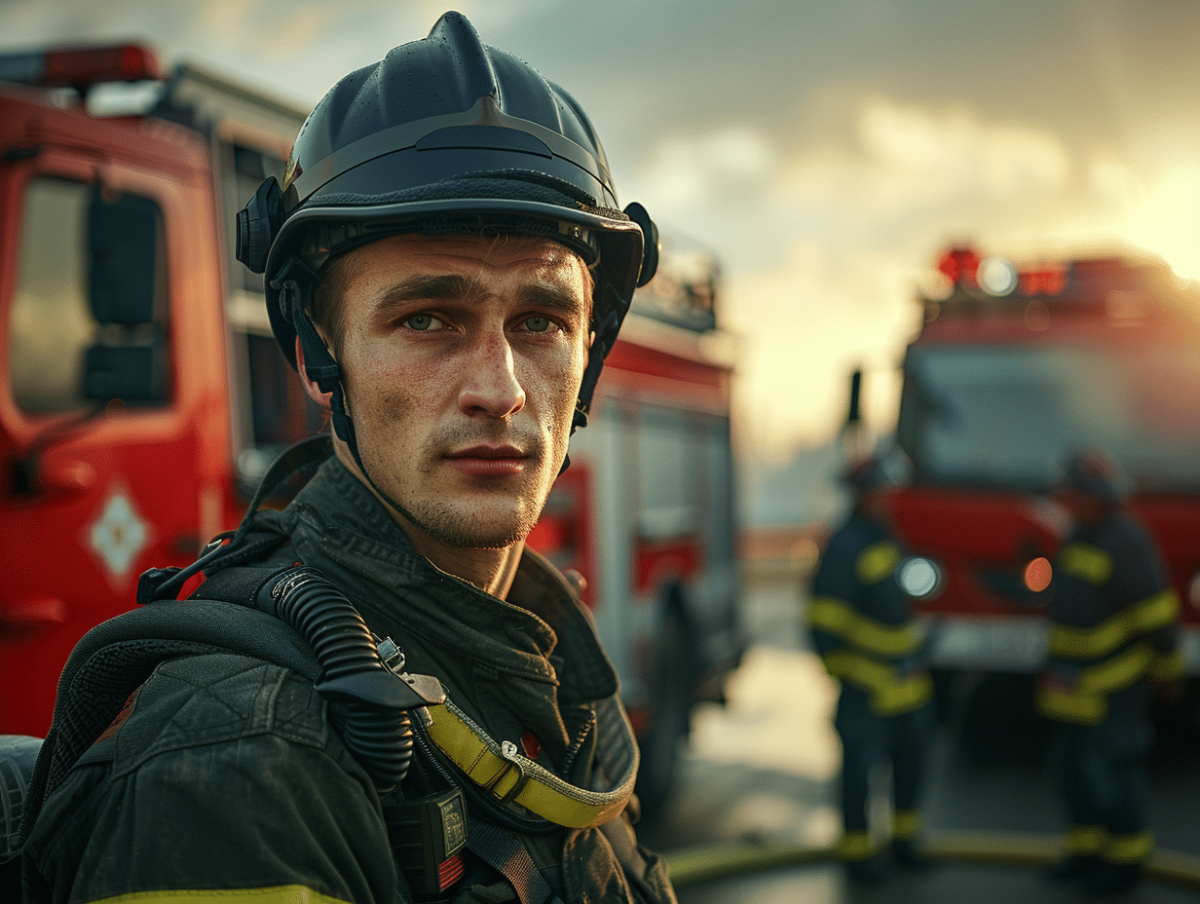
The profession of firefighter is recognized for its daily commitment to the safety of citizens. Beyond the often-highlighted heroic aspect, this profession is structured around a hierarchy and a well-defined career path. From the position of a young recruit to that of a brigade commander, each level involves increased responsibilities, specific skills to develop, and training to follow. For those considering climbing the ranks, understanding how this structure works is essential. This involves a thorough knowledge of the different grades, advancement criteria, and opportunities for continuing education.
Career Path and Progression for Firefighters
Professional advancement within the firefighters often begins with the status of volunteer firefighter (SPV). This first step allows for significant field experience while benefiting from tailored training, often more flexible than that required for professional firefighters (SPP). Indeed, decree n° 99-1039 of December 10, 1999, recognizes the possibility for SPVs to retain their rank after passing the professional firefighter exam, facilitating a smooth transition to full professional engagement.
For aspiring SPPs, a high school diploma is a prerequisite, as is enjoying civil rights. The Territorial Public Service regularly organizes exams to recruit these professionals. Passing this exam is the only way to achieve SPP status and thus enter a structured career within fire and rescue services. Continuing education plays a central role in this evolution, with specific modules for each grade and specialization.
The grades among firefighters structure career progression. They are established based on precise criteria of competence, seniority, and responsibility. For professional firefighters wishing to become officers, a specific exam, known as the professional officer exam, is available to them. This exam requires rigorous preparation, both theoretically and practically, as it grants access to command positions and management responsibilities within the departmental corps.
The relationship between professional and volunteer firefighters operates on a logic of complementarity. The Departmental Fire and Rescue Service (SDIS) sets employment rules for SPPs while evaluating and granting equivalences for training already acquired by SPVs. Therefore, it is essential for volunteers wishing to become professionals to familiarize themselves with the expectations of the SDIS and prepare accordingly. Understanding the mechanisms of this transition and the specifics of each grade is fundamental for a smooth and successful career progression within the hierarchy of firefighters.
Understanding the Hierarchy and Grades Among Firefighters
At the heart of the French rescue system, the hierarchy of firefighters is organized into a clear and tiered structure. The departmental corps, a pillar of this organization, is divided into two main categories: professional firefighters (SPP) and volunteer firefighters (SPV). Each individual’s path, while distinct, is regulated by the Departmental Fire and Rescue Service (SDIS), ensuring a certain coherence in the evolution of grades and responsibilities.
The grades, crucial in the professional life of firefighters, are divided into several levels, from rank-and-file members to senior officers. Each grade corresponds to specific technical skills, operational know-how, and managerial prerogatives. Decree n° 99-1039 of December 10, 1999, is a fundamental text that establishes a correspondence between the grades of SPVs and those of SPPs, thus allowing for mutual recognition of skills and experience.
In this context, the training provided to volunteer firefighters is designed to be more flexible, in order to accommodate their availability, as they often balance their commitment with a primary professional activity. The SDIS ensures that this training aligns with field requirements while offering equivalence opportunities for SPVs eager to join the ranks of professionals.
On a more specific scale, the firefighters of Paris and Marseille, organized respectively within the Paris Fire Brigade (BSPP) and the Marseille Naval Fire Battalion (BMPM), fall under a military structure. These elite entities operate under the aegis of the Ministry of the Interior but follow a particular regime, distinct from that of the departmental corps for the rest of the territory. This special status requires a deep understanding of the career management rules specific to these exceptional intervention units.